Cross-Selling Delivers Up to 10× Higher ROI Than Acquisition Efforts

Still Prioritizing Acquisition?
For many financial institutions, growth conversations still begin with acquisition. New accounts signal momentum and budgets are often allocated toward bringing in new households.
Yet when performance is measured through return on investment, a different picture emerges.
Industry research consistently shows that cross-selling to existing customers can deliver returns up to 10× higher than acquisition-focused efforts. This is not because acquisition lacks value, but because cross-selling operates under fundamentally different economics.
Why Acquisition Is So Expensive
Winning a new customer requires overcoming multiple layers of friction:
- Low awareness or brand consideration
- Limited trust
- Incomplete data
- Higher marketing and incentive costs
In financial services, prospect response rates are often low, and conversion time can be long. Even successful acquisition campaigns frequently require follow-up efforts before meaningful balances materialize.

The Built-In Advantage of Existing Customers
Cross-selling works because the institution already has:
- A relationship
- Transaction history
- Product usage insight
- Behavioral signals
This dramatically reduces uncertainty. Offers can be more relevant, timing can be more precise, and messaging does not need to introduce the institution from scratch.
Why ROI Skews So Heavily Toward Cross-Selling
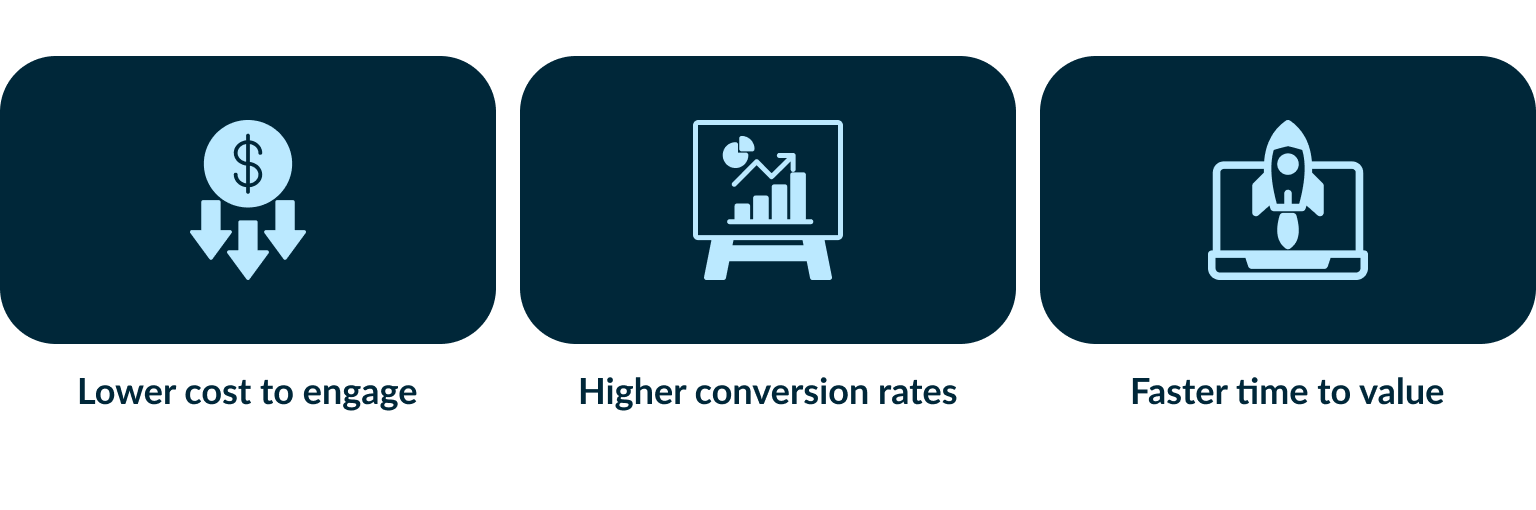
The ROI gap is driven by three key factors:
The Role of Relevance and Timing
Not all cross-selling is effective. Generic “add another product” messaging performs little better than mass prospecting.High-ROI cross-selling depends on:
- Understanding customer behavior, not just demographics
- Identifying moments of need
- Aligning product offers with financial context

A More Balanced View of Growth
This is not an argument to abandon acquisition. Sustainable growth requires both new relationships and deeper existing ones.However, when ROI is the priority, cross-selling deserves greater attention. It allows institutions to:
- Increase share of wallet
- Improve customer retention
- Maximize the value of marketing spend
In an environment where budgets are scrutinized and efficiency matters, the question is no longer whether cross-selling works, but whether institutions are fully leveraging it.
Turn Existing Relationships Into Higher ROI
We help institutions identify the right customers, the right timing, and the right offers to drive stronger cross-sell performance without increasing spend.
Fill out the form to talk with one of our team members about how we can help you increase ROI, improve retention, and share of wallet.